Halla Yang

Halla Yang

quantitative researcher · kaggle grandmaster

Senior Quantitative Researcher at Balyasny Asset Management. Former Head of Data Strategies Group at Citadel.

kaggle tier
Grandmaster
prize finishes
4
best rank
1st Pfizer, NFL

About

I'm a Senior Quantitative Researcher at Balyasny Asset Management, with long-standing interests in machine learning and artificial intelligence. Previously, I spent 2017–2025 at Citadel, where I ultimately led the Data Strategies Group.

My recent research spans neural architectures for computer vision, 3D structural biology, applications of transformers to complex problems, and program synthesis, with a particular focus on reasoning systems. I'm especially interested in how AI systems can do research themselves — forming hypotheses, testing them, and learning from the results — and in what that means for quantitative research.

Halla Yang at work

Research

Vesuvius Challenge - Surface Detection

22 / 1391

In 79 AD, Mount Vesuvius buried the city of Herculaneum and carbonized a library of papyrus scrolls into what looks like a collection of charred logs. For nearly two thousand years, nobody could read them. The Vesuvius Challenge is trying to change that by using CT scanning and machine learning to virtually unwrap and read these scrolls without physically unrolling them, which would destroy them. I trained models that would generate topologically sound scroll segments, finishing 22nd out of 1391 participants in a Kaggle competition.

  • Convolutional Neural Networks
  • Surface Segmentation
  • Topological Features

RNA 3D Folding

24 / 1516

Google DeepMind's Demis Hassabis and John Jumper shared the 2024 Nobel Prize in Chemistry for protein structure prediction, but the problem of RNA 3D structure prediction remains open due to greater difficulty and fewer experimentally resolved structures usable for training data. Stanford's Rhiju Das hosted a Kaggle competition to stimulate research, and I explored methods based on both AlphaFold and language models to try to improve the state of the art. My approach relied neither on templates nor MSAs, and finished 24th of 1516 contestants in the first Stanford competition, and 48th of 1867 contestants in the second Stanford competition.

  • Transformers
  • Diffusion Models
  • Structural Biology

AI Mathematical Olympiad

34 / 2213

Can LLMs solve Mathematical Olympiad level problems? While OpenAI and other foundational model trainers have pushed the limits of what can be done given infinite resources, this competition posed the question of what could be implemented on 4xL4 GPUs in a finite amount of compute time. I finished 34th of 2213 on the Kaggle leaderboard for the "Progress Prize 2" competition (closed April 1, 2025).

  • Large Language Models
  • Problem Solving
  • Efficient Inference

ARC-AGI Challenge

research

Visual puzzles requiring reasoning and symbolic knowledge are straightforward for humans to solve, but a challenge for even frontier LLMs. See this New York Times article from March 2025 for a description of the challenge. The third version of the benchmark, ARC-AGI-3, replaces static puzzles with interactive games: an agent is dropped into an unfamiliar game with no instructions and must work out, by experimenting, what its actions do and what counts as winning, then clear each level in as few moves as it can. My current work on ARC-AGI-3 treats this as a problem of learning and acting in a new world. I have built agents around learned world models and explicit goal inference, as well as harnesses in which an open-weight language model plays the games under tight compute limits, and I am using reinforcement learning on gameplay to teach the model to explore and form hypotheses more effectively.

On the earlier ARC-AGI-2 puzzles, I explored approaches based on both Bonnet and Macfarlane's Latent Program Networks, and also Jolicoeur-Martineau's Tiny Recursive Models.

  • Interactive Reasoning
  • World Models
  • Reinforcement Learning
  • Program Synthesis
  • Transformers

Kaggle

Kaggle Competitions Grandmaster badge

Competitions Grandmaster

View full Kaggle profile

Notable competition results

  1. Prescription Volume Prediction 2013

    Forecast sales and measured marketing effectiveness for Pfizer Oncology. Won $17K.

    1st
  2. NFL Punt Analytics 2019

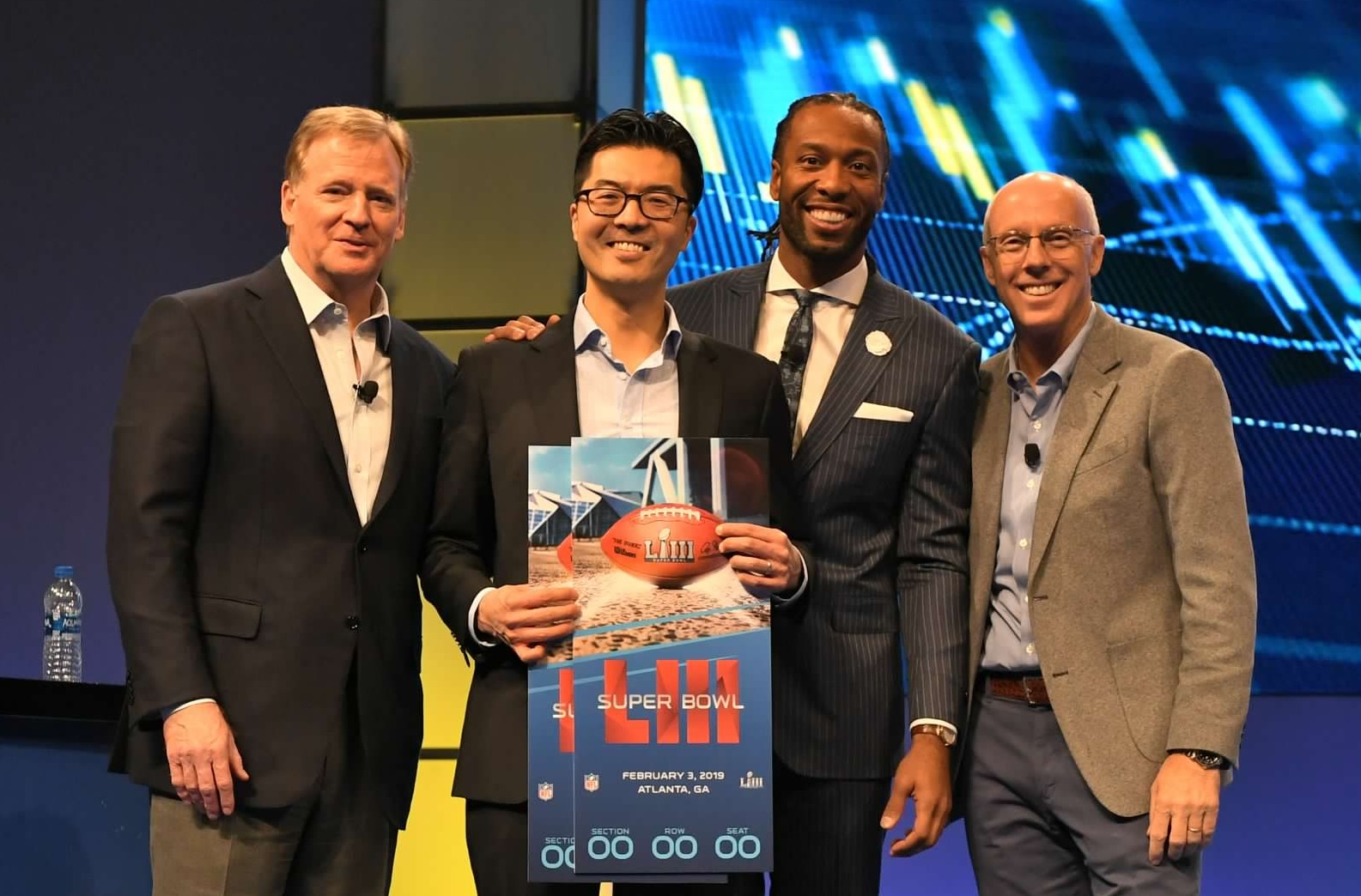
    Proposed data-driven ideas to reduce concussions in punt plays while preserving game integrity. Won $20K + 2 tickets to Super Bowl LIII.

    1st
  3. Coupon Purchase Prediction 2015

    Developed models of online browsing and purchase behavior. Won $15K and received mention in XGBoost documentation.

    2nd
  4. Passenger Screening Algorithm Challenge 2017

    Improved accuracy of airport threat detection systems. Won $100K, shared with teammate Phillip Adkins. See conference presentation from the Advanced Development for Security Applications (ADSA) Workshop 19, and DHS press release.

    6th

Other top-10 finishes: 6th of 236 in the Merck Molecular Activity Challenge (2012) and 9th of 661 in Diabetic Retinopathy Detection (2015).

Background

Experience

  1. 2026–

    Senior Quantitative Researcher Balyasny Asset Management

  2. 2017–2025

    Head of Data Strategies Group Citadel

    Joined as a Fundamental and Economic Analyst; became Co-Head of the Data Strategies Group in 2019 and Head in 2023.

  3. 2015–2017

    Expert, Advanced Analytics / Data Science McKinsey

    Developed data science capabilities and forecasting models on behalf of industry-leading clients.

  4. 2013–2015

    Quantitative Researcher Jump Trading

    Quantitative research and trading.

  5. 2011–2012

    Portfolio Manager Arrowstreet Capital

    Managed portfolios and conducted research on behalf of institutional clients.

  6. 2007–2011

    Vice President Goldman Sachs

    Researched and productionized alpha signals in quantitative equities.

  7. 2000–2002

    Analyst Dean and Company

    Conducted analysis and research on behalf of strategy consulting clients.

Education

  1. 2002–2007

    Ph.D. in Business Economics Harvard Business School

    Researched alpha-generating signals and optimal arbitrage strategies.

  2. 1996–2000

    B.A. in Physics, Summa Cum Laude Harvard University

    Studied physics, math, and music. Visiting scientist at the Max Planck Institute of Quantum Optics (summer 2000), working on quantum computing research using trapped ions.

Papers

  1. SSRN

    Do Industry-Specific Performance Measures Predict Returns? The Case of Same-Store Sales

    Showed that hand-collected monthly data on same-store sales could be used to forecast quarterly earnings and equity returns.

  2. SSRN

    Dynamic Portfolio Selection in Arbitrage

    Derived optimal trading strategies for equity pairs trades and other arbitrage opportunities, with empirical results using Royal Dutch-Shell as a canonical mean-reverting spread.